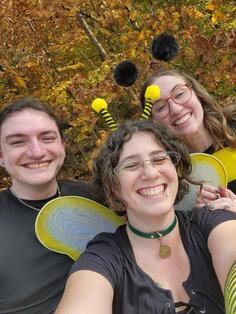
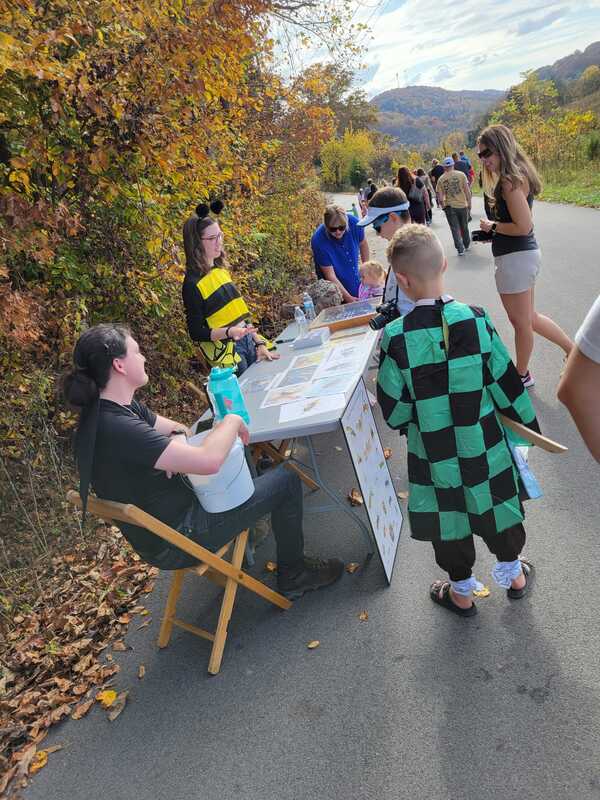
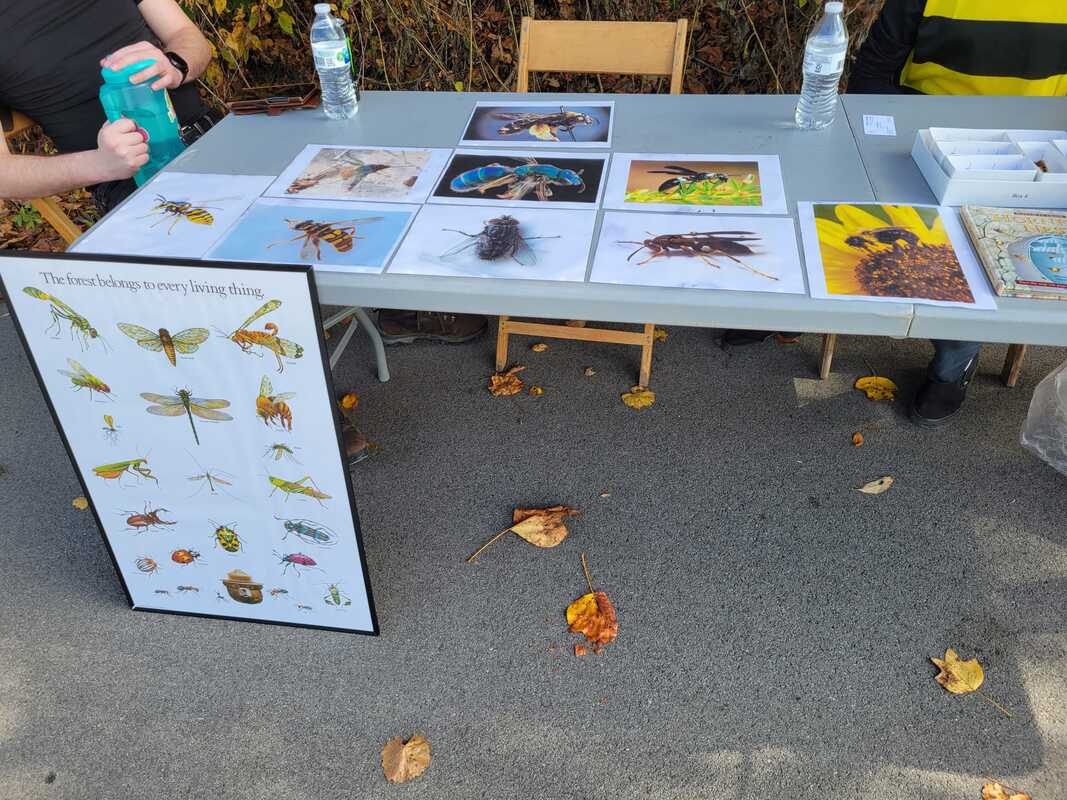
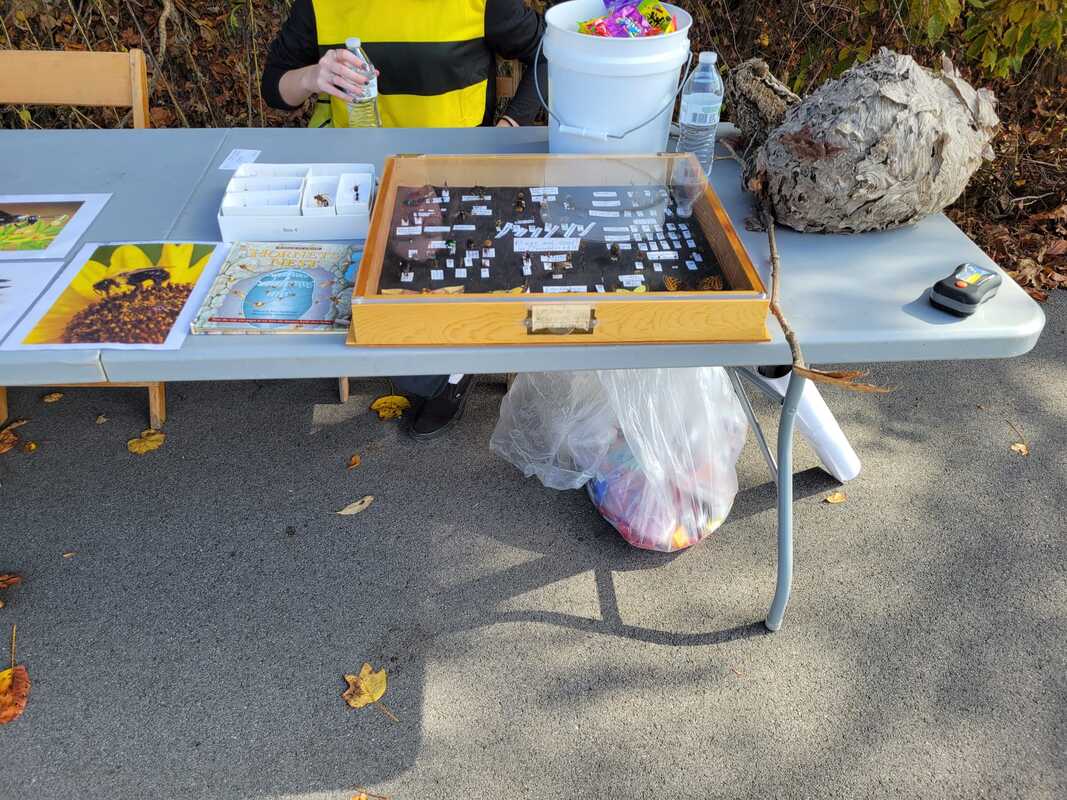
 Members of the Russo lab participated in a lot of outreach events this semester, including the Rocky Top Bioblitz, an event for Girl Scouts held on campus, and an outreach event at Seven Islands State Birding Park (which resulted in some great photos!). I also gave a talk about BEES at the Butterfly Festival at the UTK Arboretum. We love doing outreach activities and getting involved in local events, plus we can always show off our best bee costumes.
0 Comments
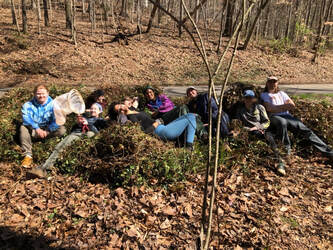
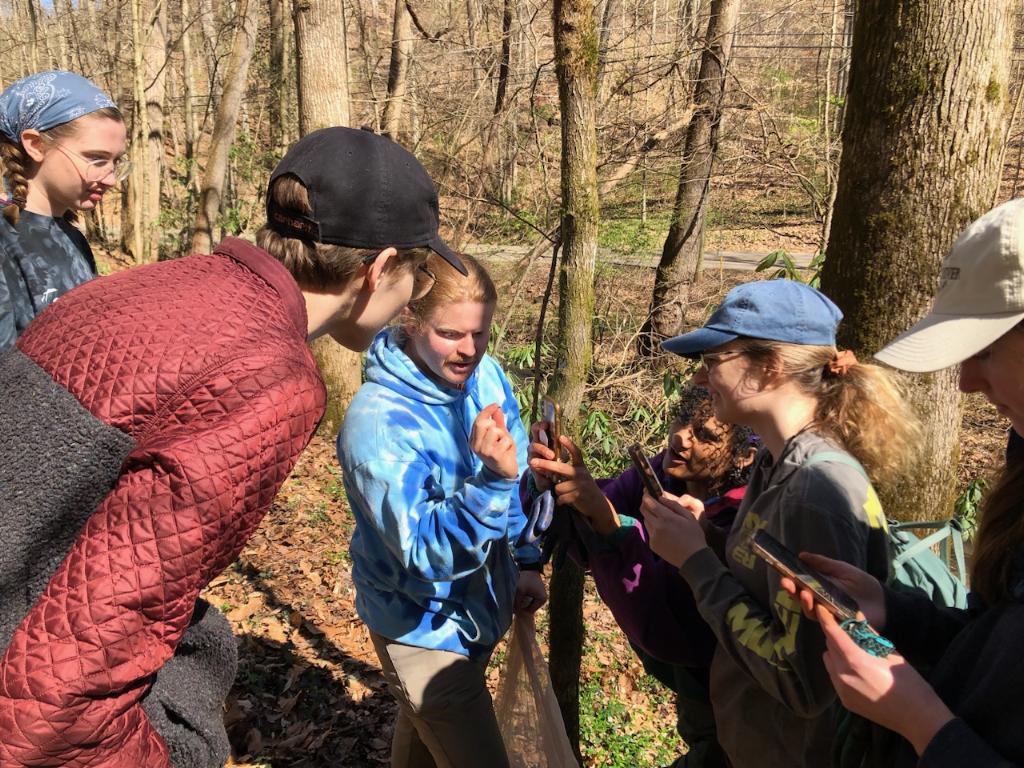
I am happy to announce that Amani's first, first author paper, which used data from her Master's Degree thesis and the first two years of the Feed A Bee Project, has finally been published! I'm so proud of Mani's work and of my students in general, and so happy to have this first Feed A Bee (and truly my first pub on the TN work) be published. Here's a link to the article: https://link.springer.com/article/10.1007/s10980-023-01728-5  Khalil, A., Sykes, V. and Russo, L., 2023. Floral identity and availability along with surrounding landscapes affect pollinator communities in eastern Tennessee. Landscape Ecology, pp.1-16. Methods summary: Over two years and across five landscapes in eastern Tennessee, we surveyed flower visitors to fixed communities of 18 species of native perennial plants (the Feed A Bee project). Mani was interested in whether the landscape surrounding these sites had a significant effect on the abundance, species richness, and composition of the flower visitor community. Previous works showed significant land-use effects, but importantly we controlled the plant community so that it did not vary along with land use. 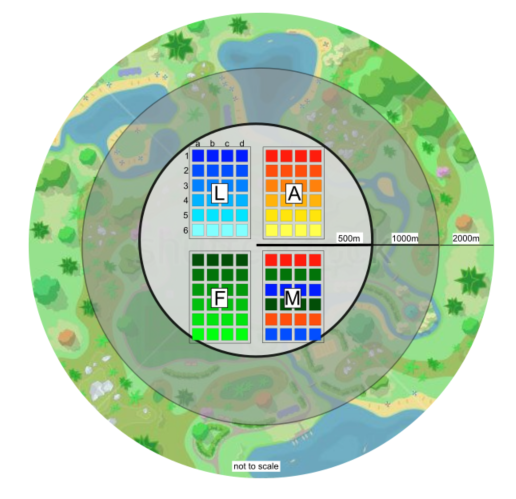 A heuristic diagram of the plot composition and fixed design, with the radii of varying land use that we measured (figure not to scale). L stands for plants in the mint family (Lamiaceae), A stands for plants in the sunflower family (Asteraceae), and F stands for plants in the pea family (Fabaceae). M was a mix of all three. 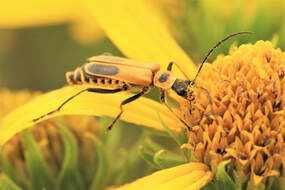 Results summary: We found no consistent, significant effects of land use at any radius around the site on overall flower visitor abundance, species richness, or composition. Plant abundance and identity were the main drivers of the flower visitor community. However, we did find some interesting land use effects on specific insects of interest. The most abundant non-bee insect was the soldier beetle, which was significantly more abundant when there was more agriculture in the surrounding landscape. We also saw a positive relationship between honeybee abundance and developed (urban) land use around the sites. 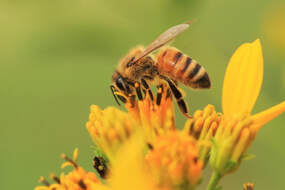 As the spring ephemerals start to bloom, the Russo Lab is getting busy visiting bee aggregations and starting new projects. This past weekend, Dr. Russo, grad student Sam, and I (undergraduate but future grad student Sydney!), went to Dean's Woods to help clean out invasive species. The naturalist club also attended (pictured here in a big pile of pulled invasives) and Sam got some great experience teaching the undergraduates about Andrena specialists!
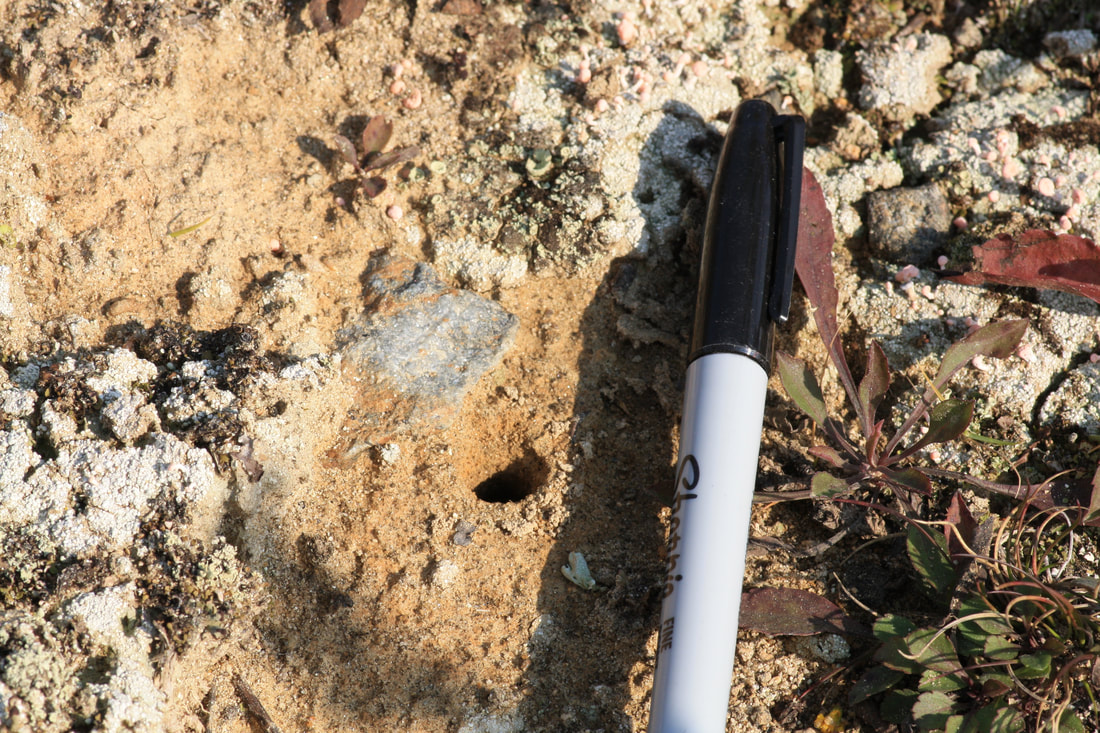
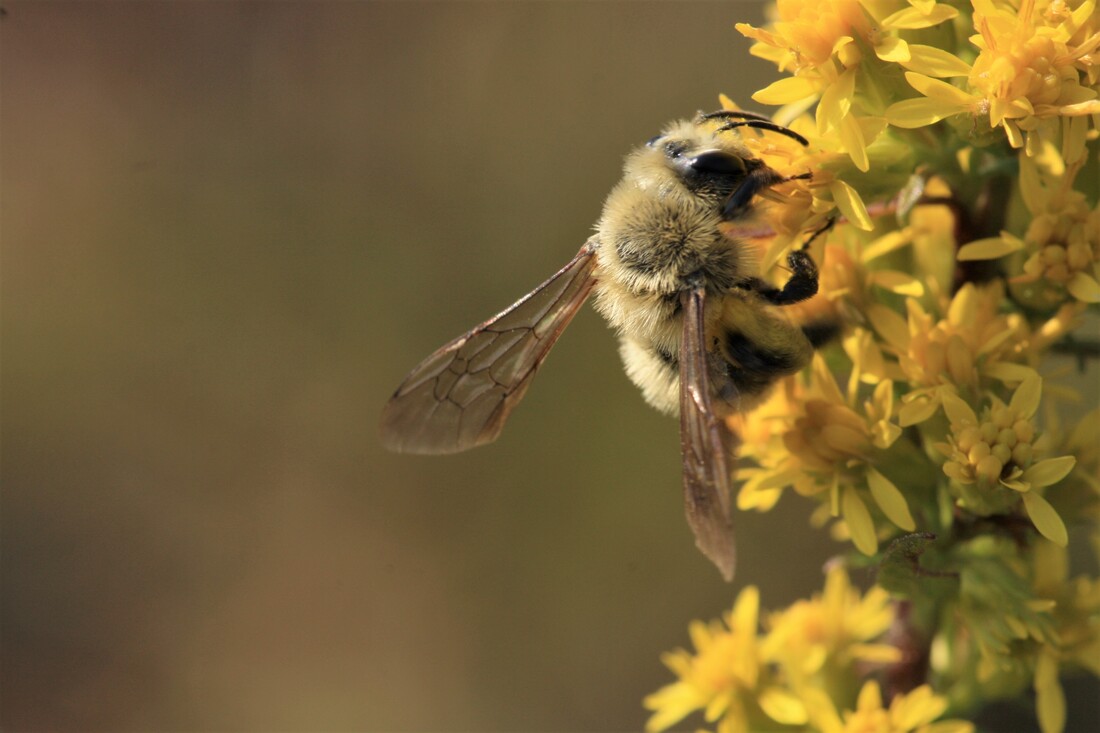
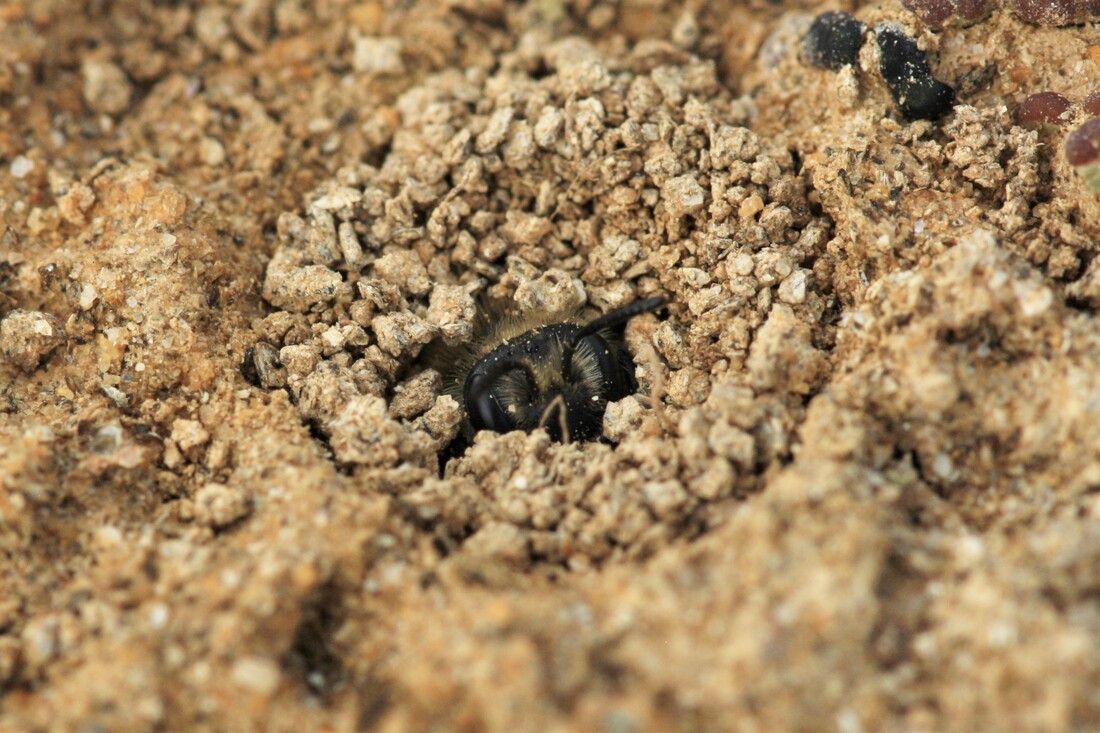
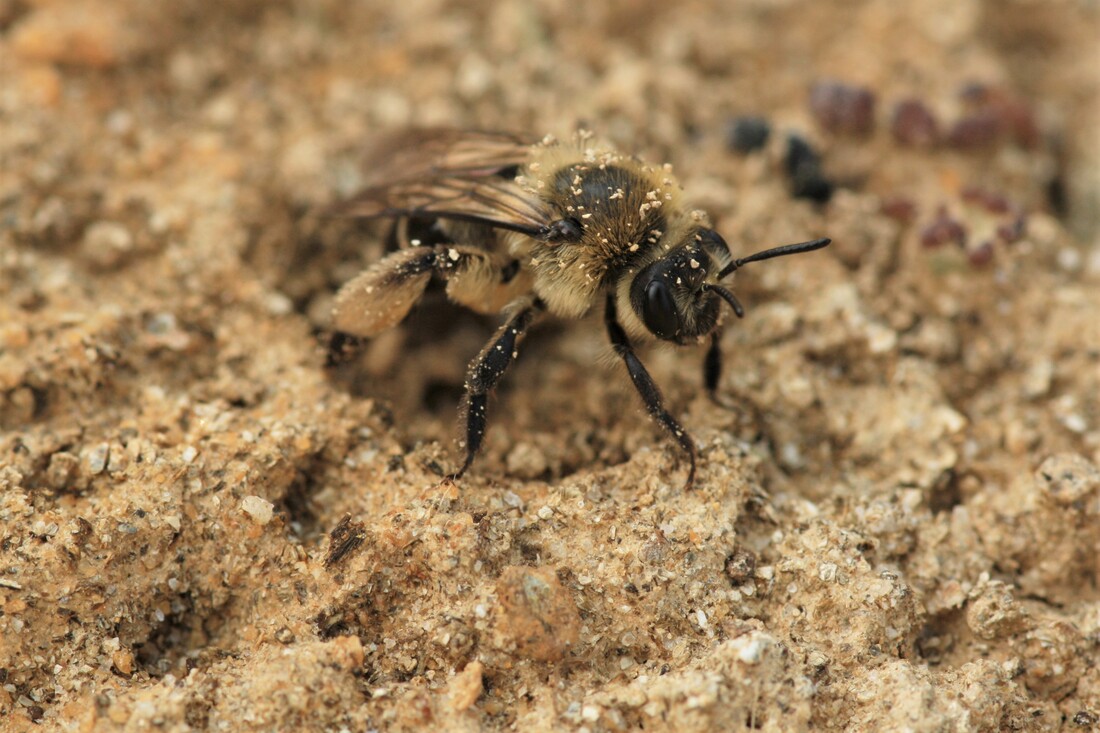
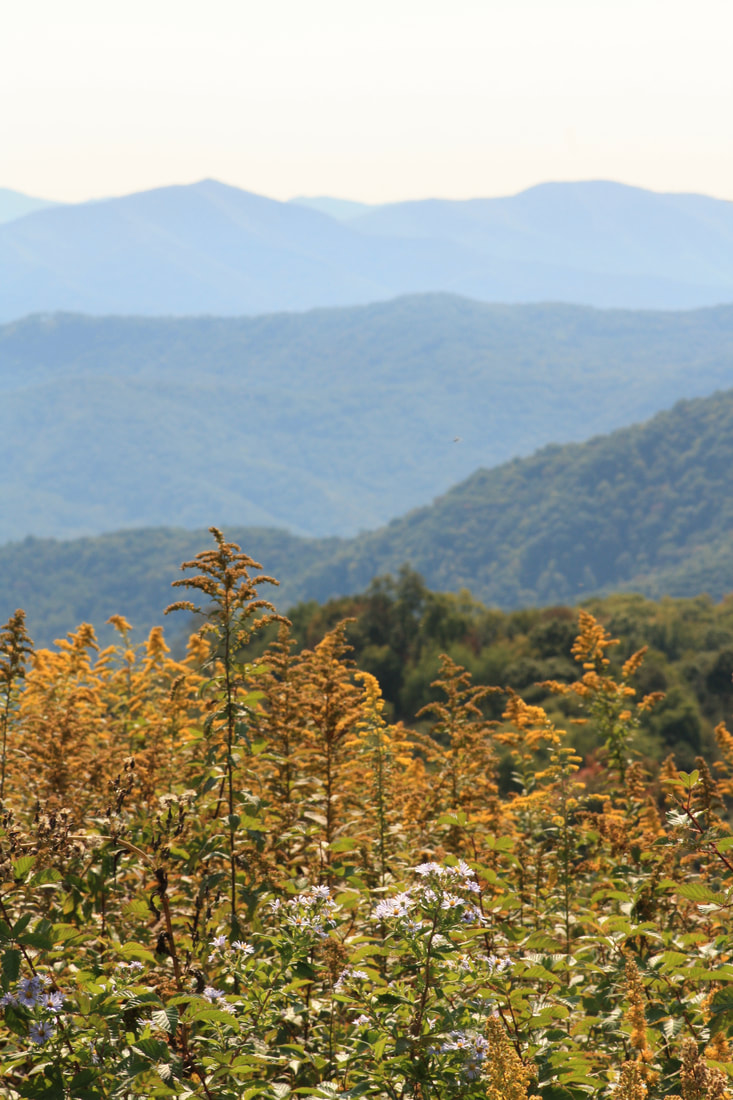
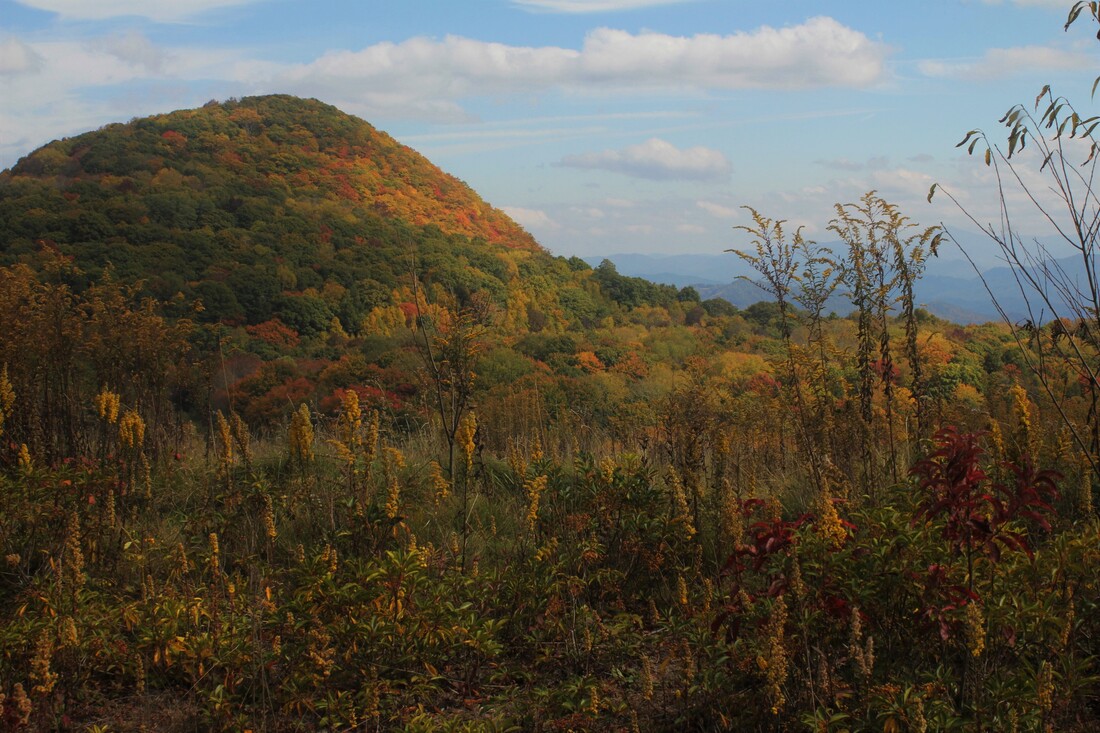
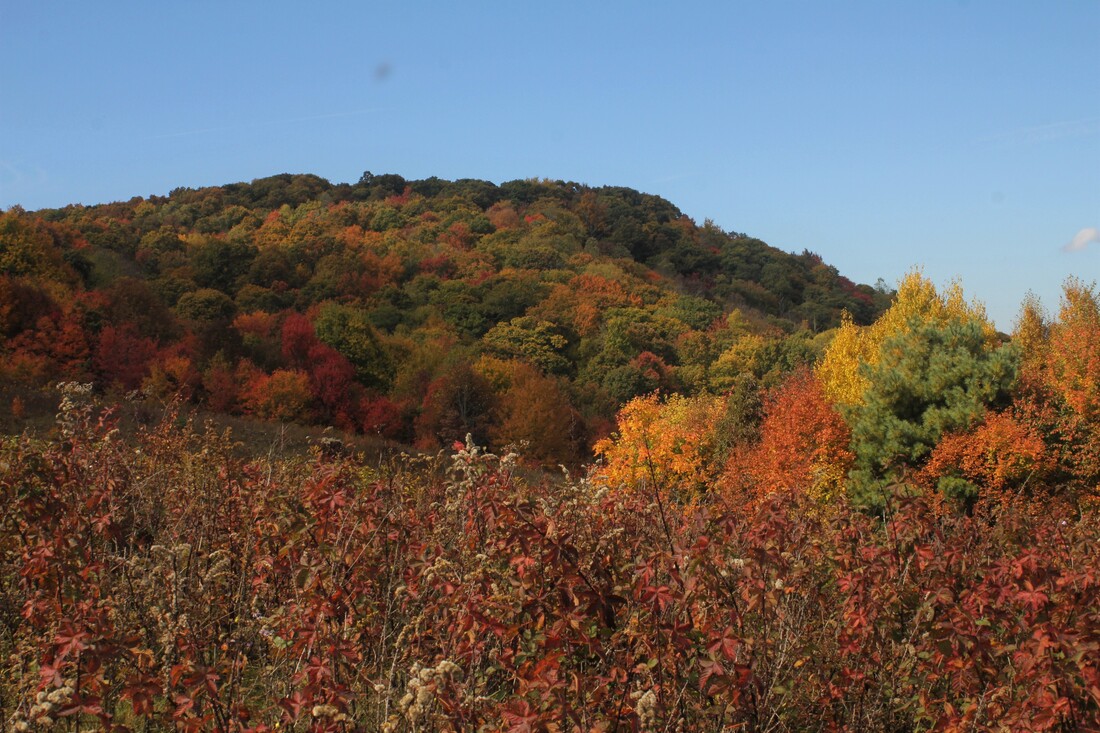
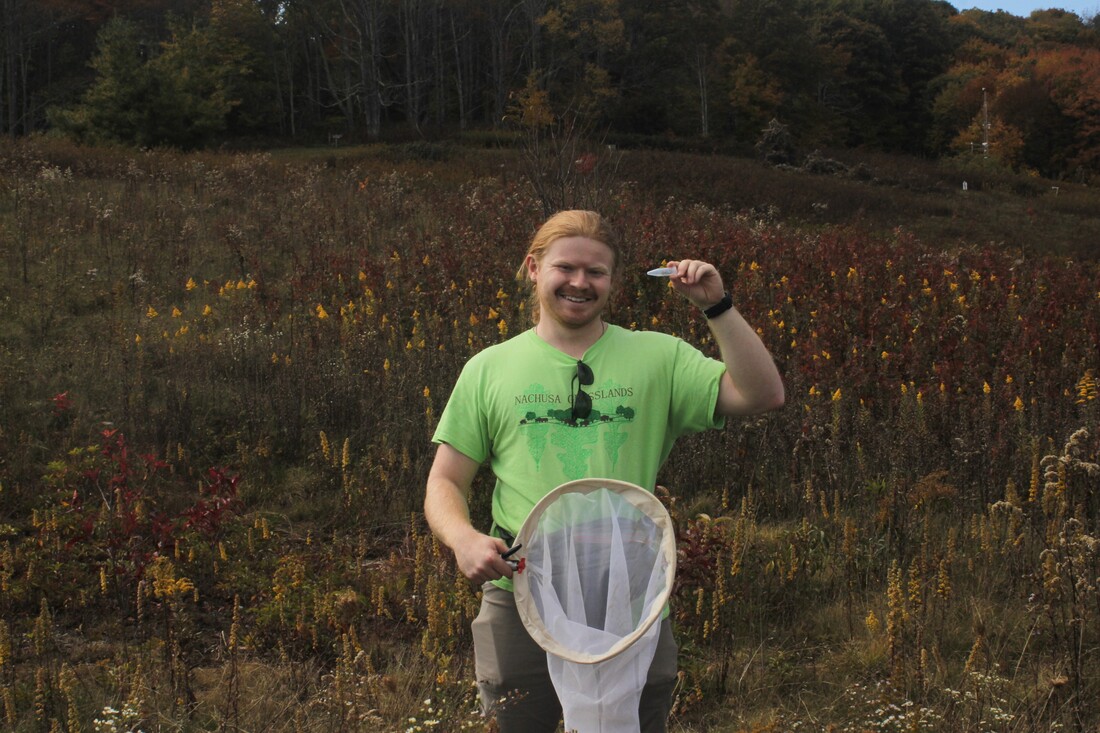
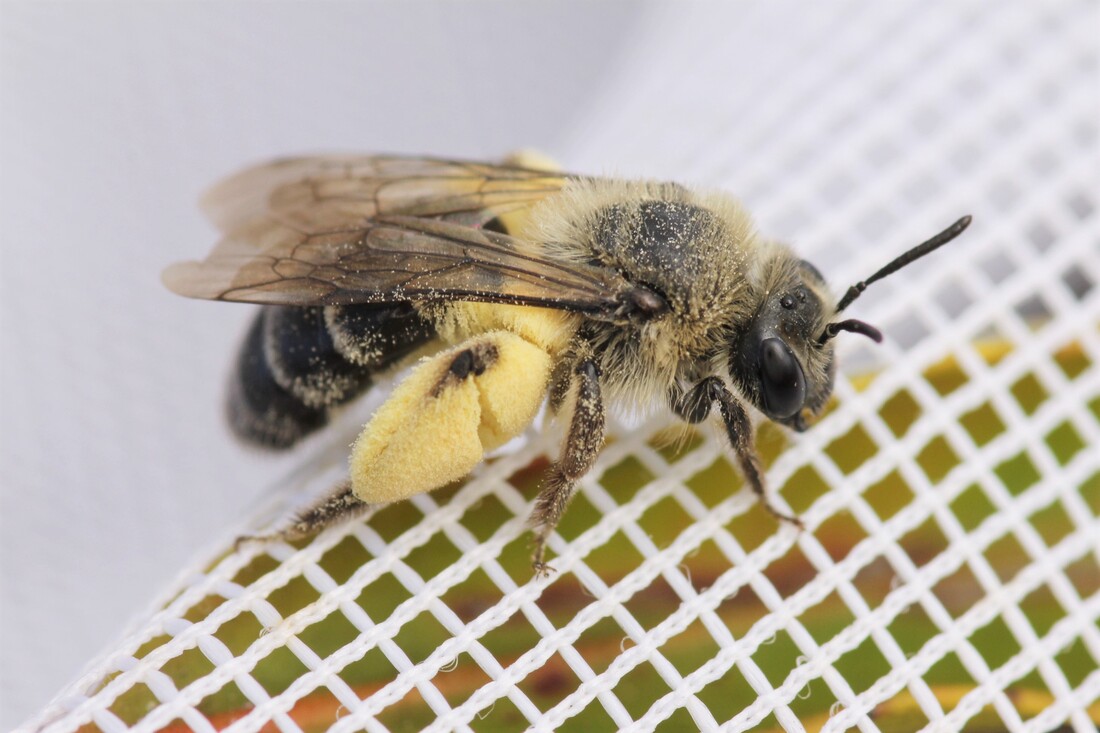
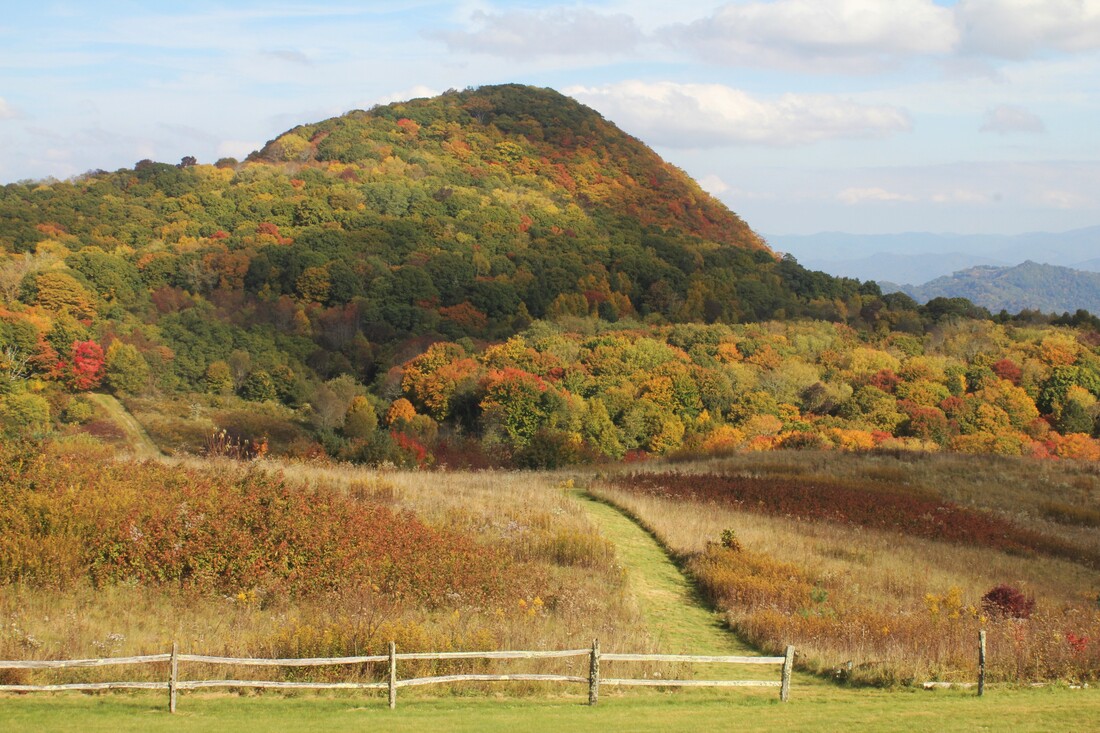
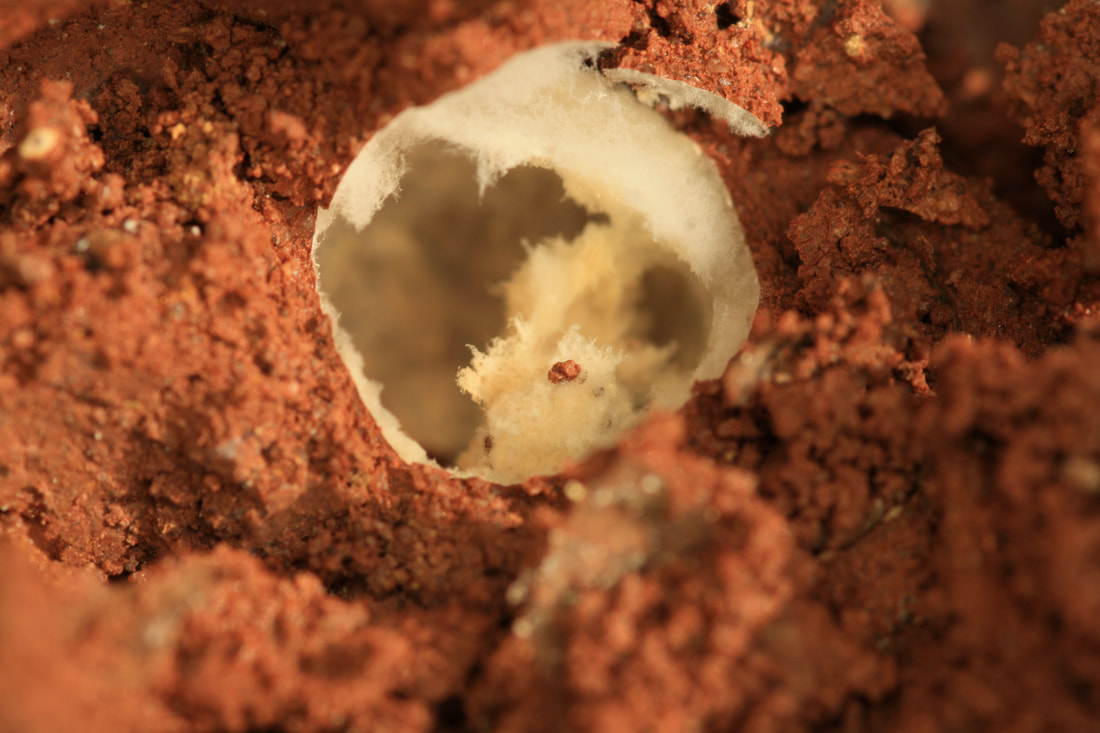
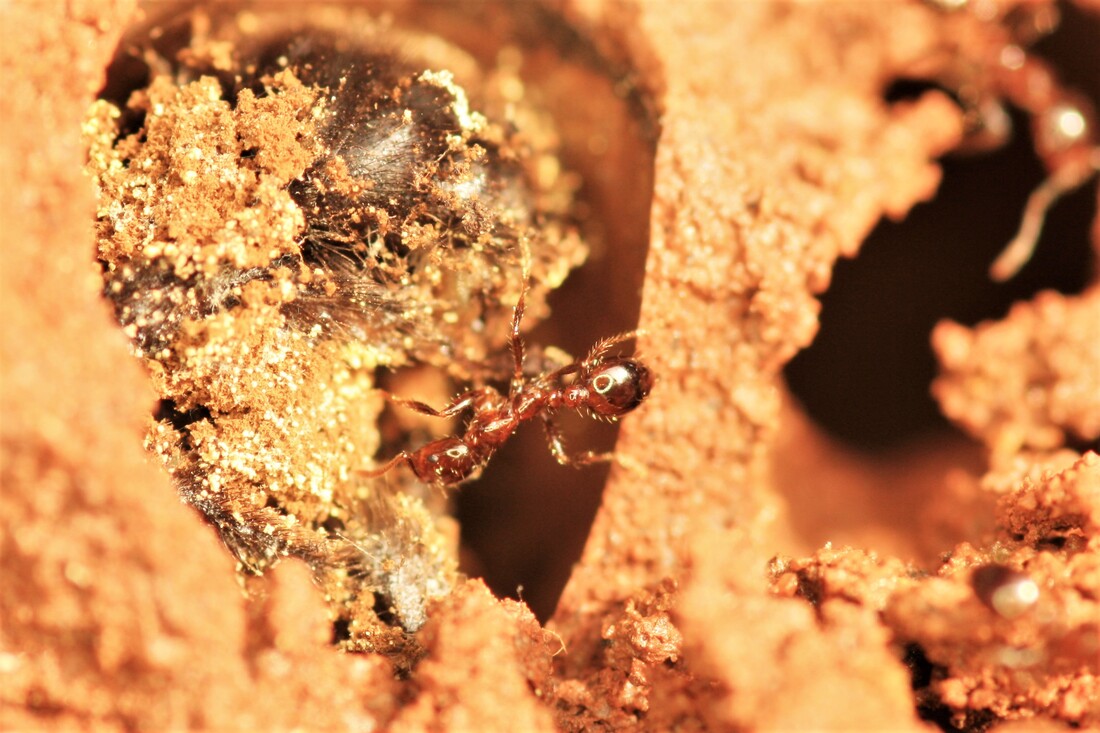
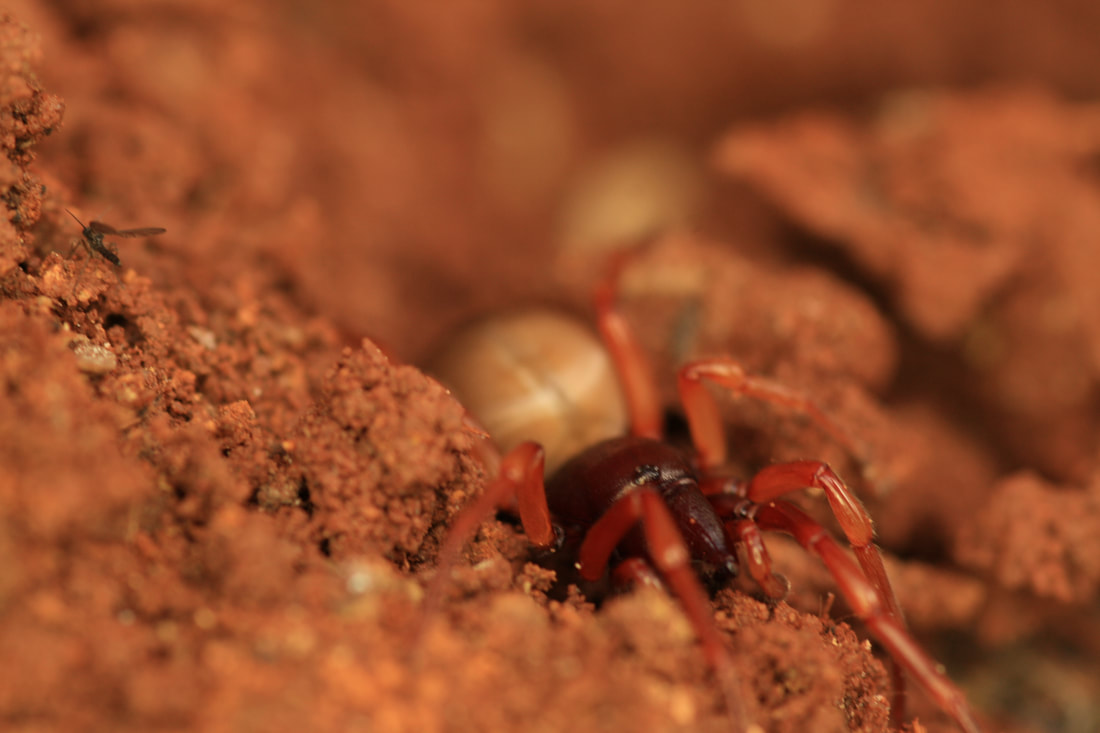
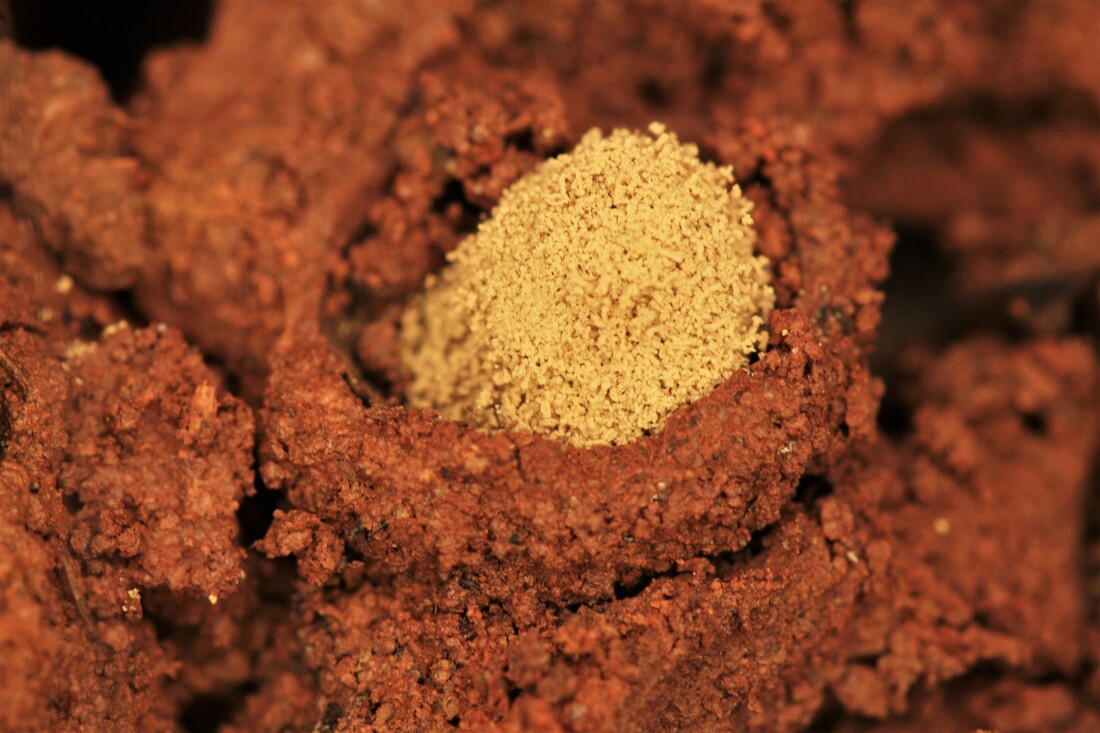
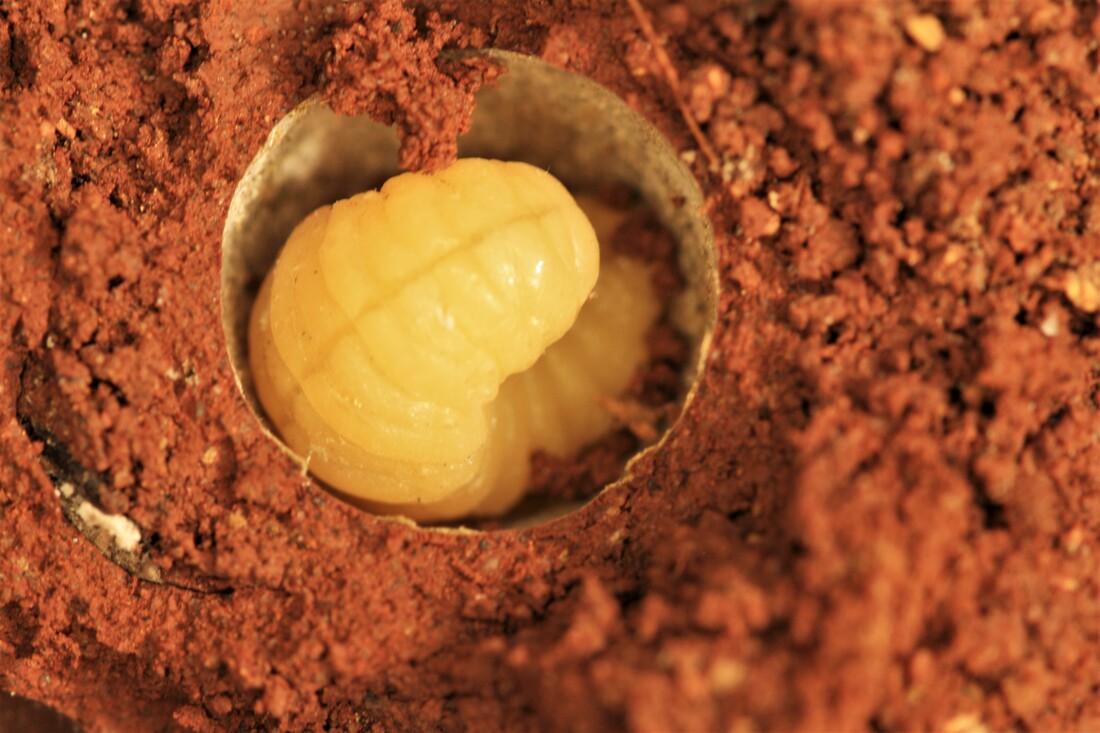
Afterwards, we went to visit a few local bee aggregations! The colletes aggregation was super active with males waiting to pounce on any emerging females. The best moment was when we saw a mating ball rolling down the hill. Since then, Dr. Russo has made the "getting the ball rolling" joke about a million times. Luckily she captured a video of the moment shown below! 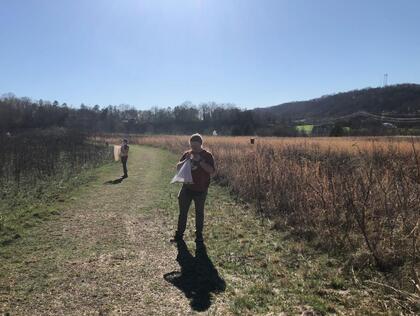 We then went to Seven Islands State Birding Park to visit a couple more aggregations! There, Sam taught me how to catch bees with a net as I have only used the vacuum before. The key was to know that bees are "positively phototropic" which soon became our favorite phrase. We are practicing as we will start Sam's new project in the Cedar Glades soon! More is to come!! I hope your spring is progressing well! As the red maples in town finish their bloom and life emerges all around us from its winter dormancy, it seems like the perfect time for us to reinstate the EEB Naturalists' Club here at UTK. Are the frogs calling? Are the birds migrating? Are there chanterelles? Where are the best ground-nesting bee aggregations? What's blooming when and where? How many osprey nests are there in town and where can I see otters? If you're fascinated by the natural world and want to learn more or share your discoveries, join us for the first 2023 meeting of the club! Let me know your availability on this when2meet for next week. https://www.when2meet.com/?18844786-IeQje 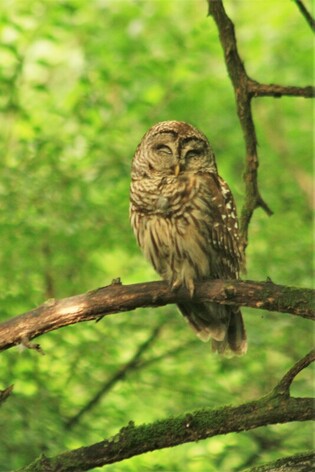 So happy that this paper finally came out! Lots of work with lots of collaborators. Jane did a great write up about the paper here:  Our research contact in the GSMNP, Paul Super, alerted us to the presence of this unique aggregation of ground-nesting bees in the national park a couple of years ago. Apparently, this space used to be an old tennis court, and there must be something special about the way the soil was managed, because there are tons of Andrena asteris (among others) nesting in this small area. Andrena asteris specialize on late season Asteraceae pollen. They also leave a sand plug in their nest entrance, so it is very difficult to dig up their nests (although I believe Bryan Danforth has successfully done so!). This area is also absolutely gorgeous in the autumn. Here are some selected photos from 2020. Sam and I went back this autumn, so here are some photos from this year! 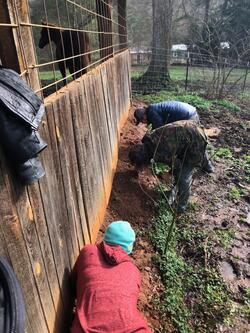 Graduate students Erika and Nick and research technician Karl studying chimney bee nests next to a horse barn in Maryville. Quite a bit muckier than expected! It's been a while since anyone posted on the lab blog, because mainly Mani handled that in the past and she's successfully graduated, defended her thesis, and gotten a fantastic job. But we have new exciting project going on in the lab and I thought I'd share some of the new things we are working on! 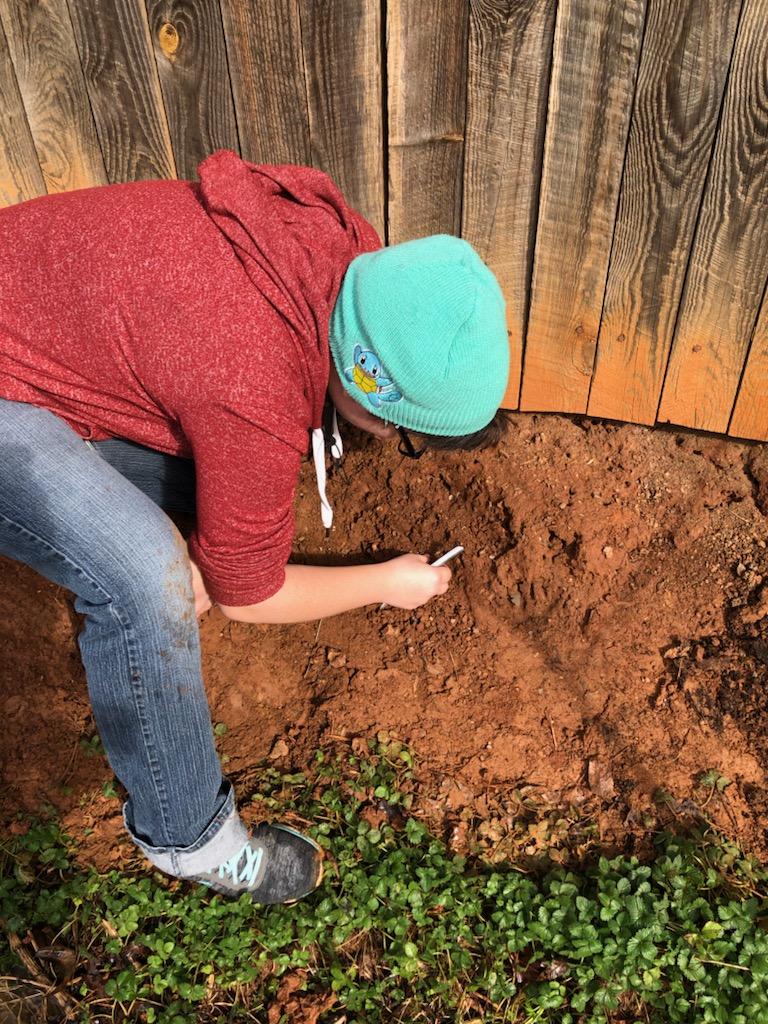 Erika collecting bee larvae to rear in vitro as we try out new bee-rearing methodologies. If we can rear them in vitro, we can experimentally manipulate their nutrition. New graduate student, Erika Dalliance, is interested in ground-nesting bees and the things that make them aggregate. We've decided to start with the relatively easy-to-study chimney bee (Anthophora abrupta). Not only have we found multiple aggregations of this species, but they dig shallow nests that are easier to survey/monitor (as compared to the Andrena nest Mani and I dug up a couple years ago that was 37 inches deep). Photos of the bee larvae and their associates, including ants, spiders, and some fungal pathogens.
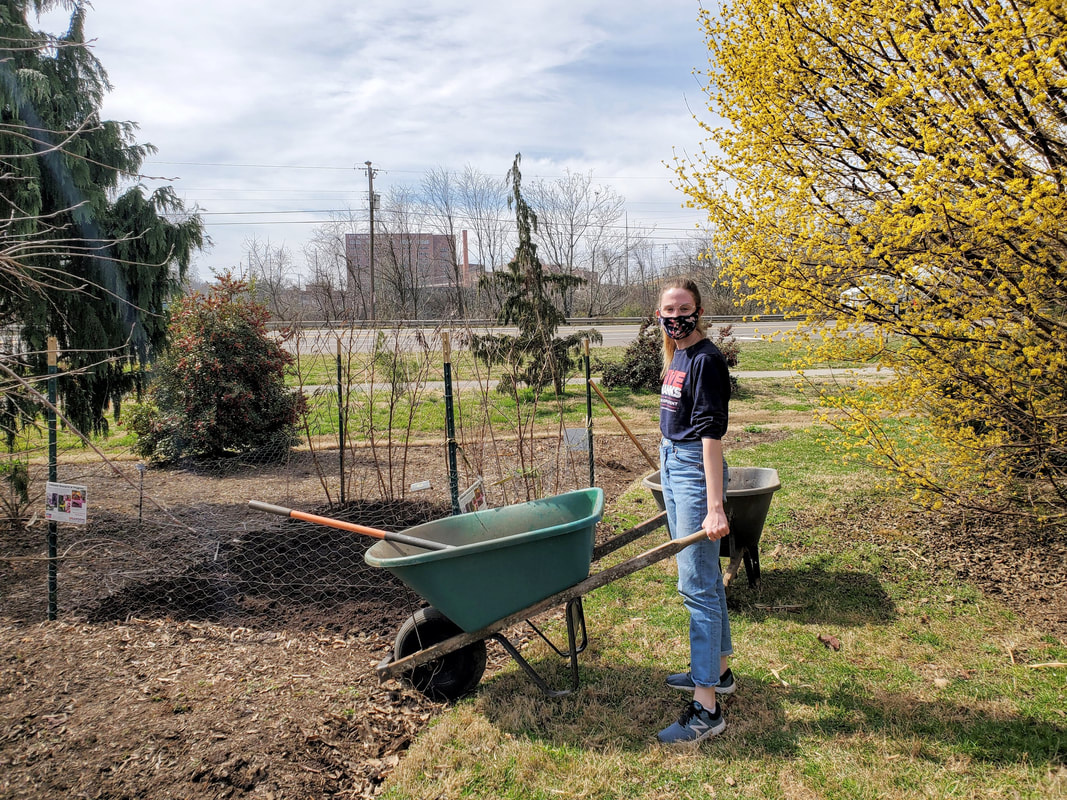
Things are finally warming up here in Knoxville and the Russo Lab is very eager to get outside and enjoy it. Our excellent undergraduate, Sydney Baldwin (left image) spent some time getting her hands dirty at the Feed A Bee plots at the UT Gardens.
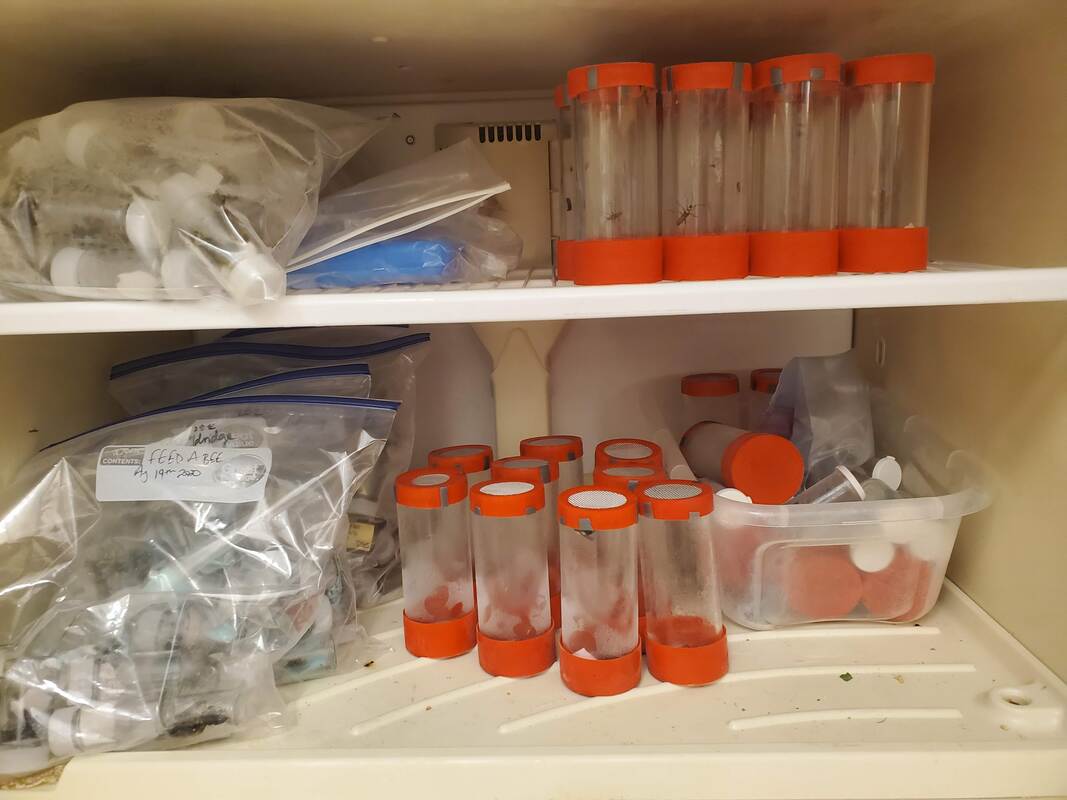
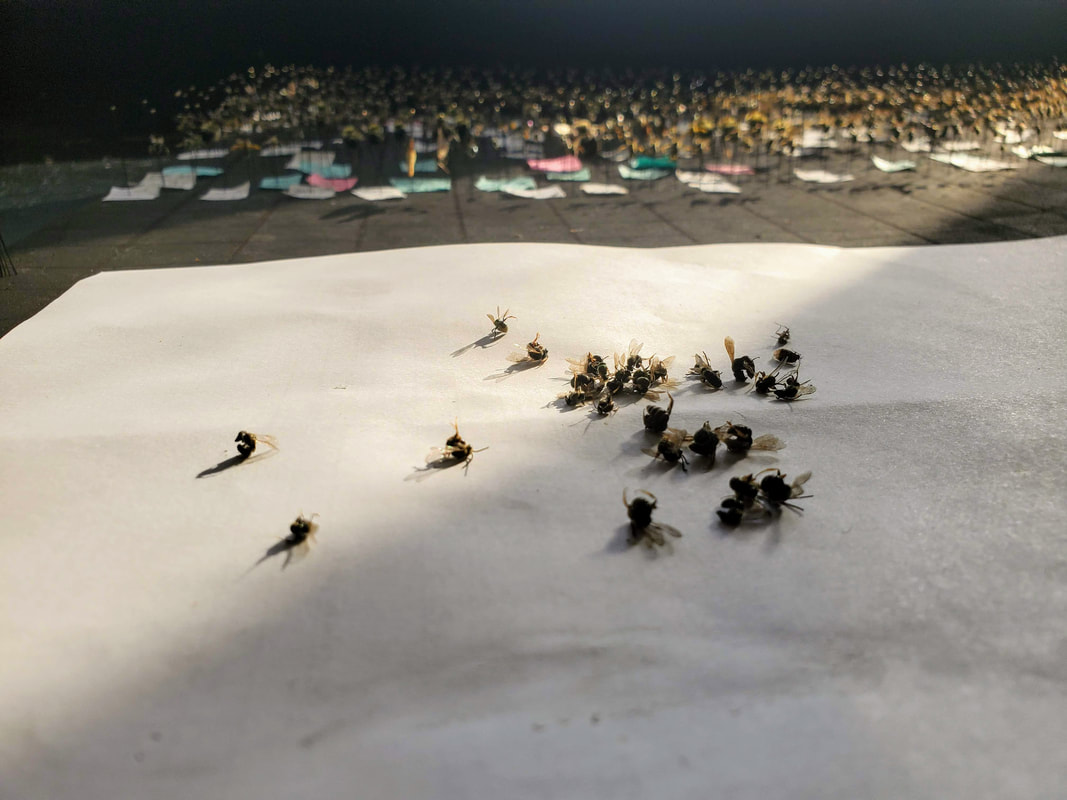
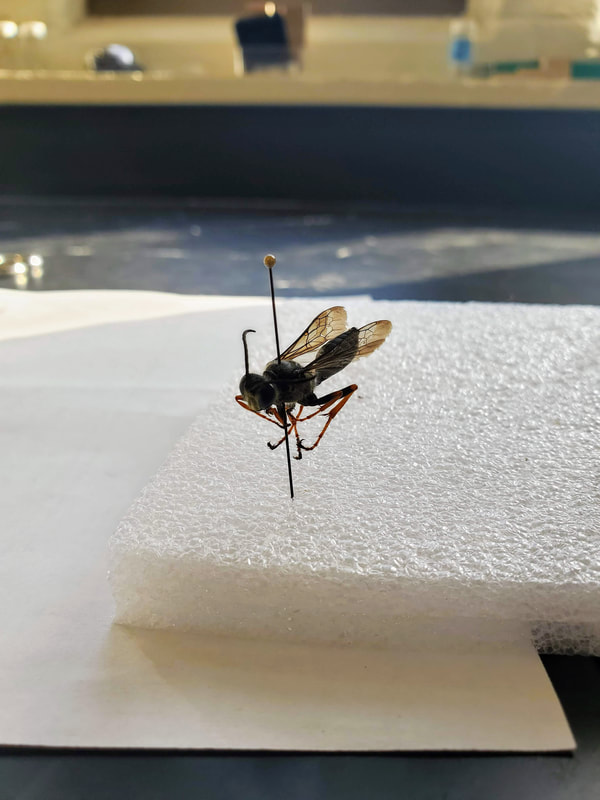
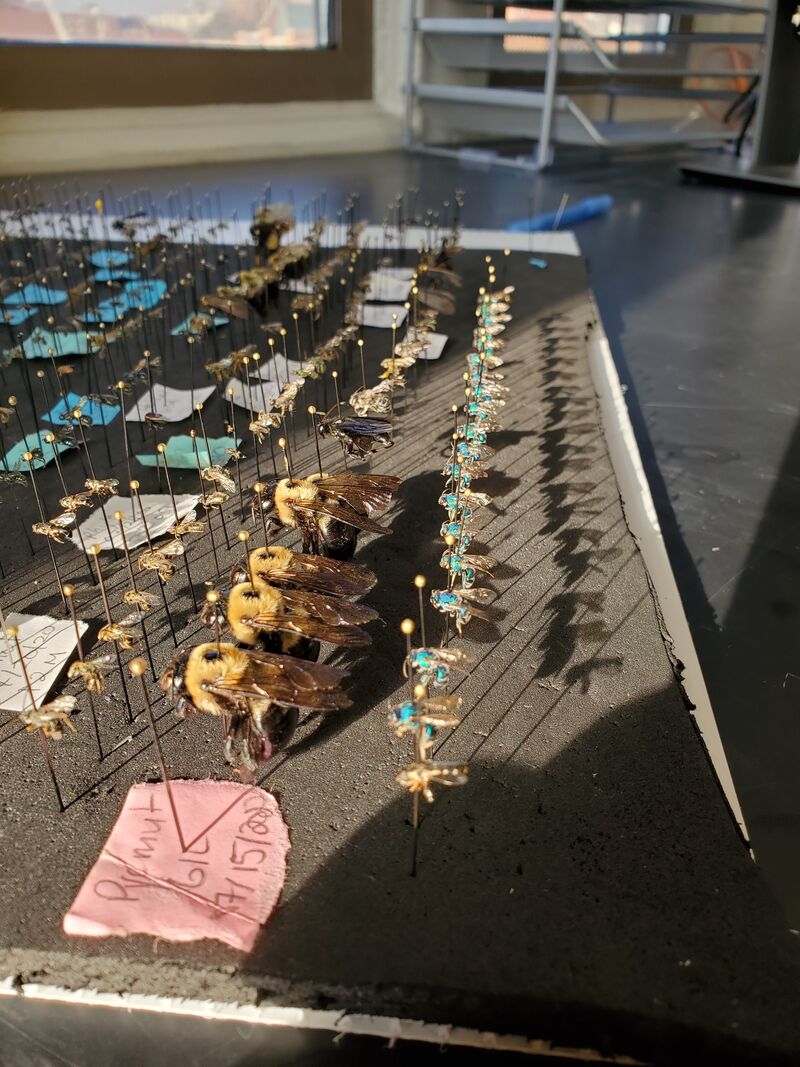
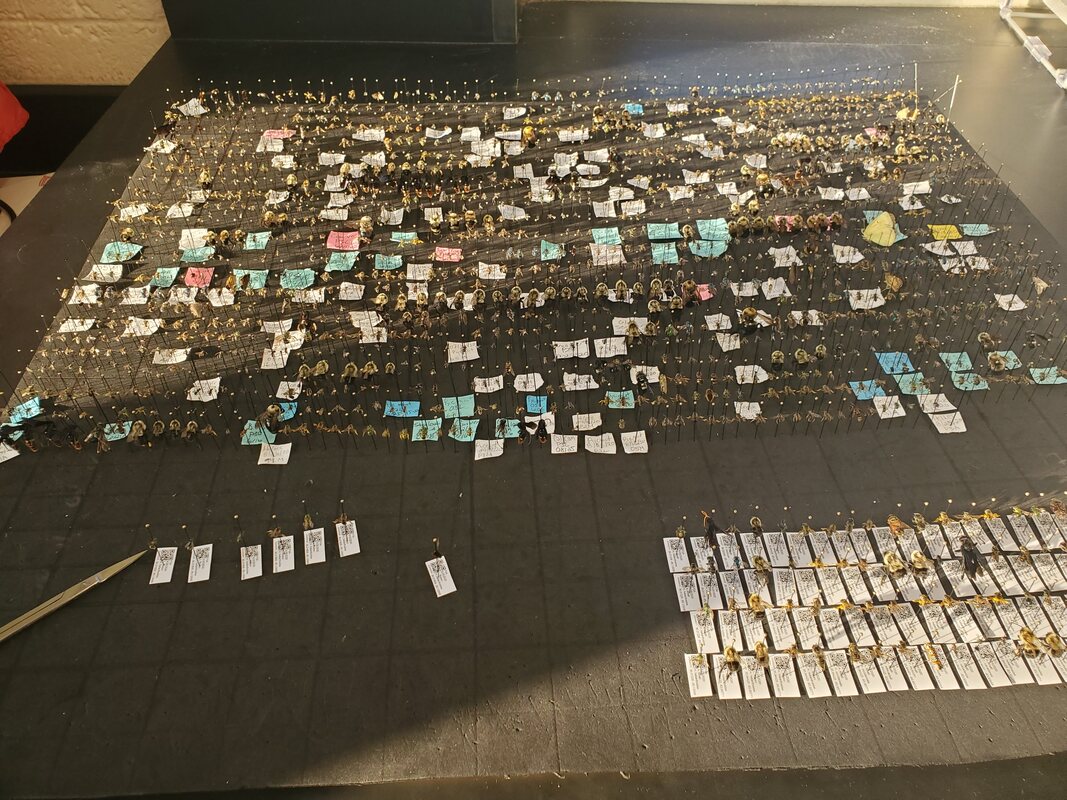
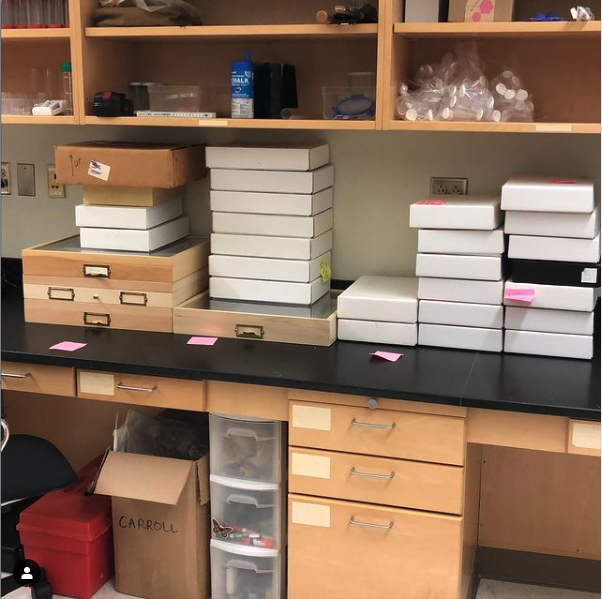
We would also like to acknowledge the other MVP of the Russo Lab, our lab vehicle Xyxy, short for Megachile xylocopoides (right image). We loaded her up with 16, 20lb bags of mulch and 12, 40lbs bags of compost and she only squeaked a little! Here's a (few mulch specks in your water bottle) toast to Field Season 2021! Remember all those specimens we pinned and identified a month ago? Well we brought all our bees to the great Sam Droege, USGS for species level identifications. Sam Droege is a superstar taxonomist, and a strong advocate for less lawns, more flowers. Here a few peeks into the Native Bee Lab. Insect pollinator conservation has attracted a lot of attention and rightfully so. There are so many unanswered questions about our six-legged friends, but the work goes way beyond vacuuming up a few thousand bugs. Once the days become cooler and shorter. We roll up (or roll down...it gets pretty chilly in the lab) our sleeves and begin the process of insect pining and identification. Step 1) Clean out your freezer full of specimens! (picture 1) Step 2) Empty out each specimen container carefully (picture 2) Step 3) Stab each specimen with a sharp fancy pin, ideally right through the thorax for most insects (pictures 3). Step 3) Once everyone has been staked, we print out these fancy labels with QR codes that tell us the collector, date, place, and flower the insect was collected on (see picture 5). Step 4) Now that everyone has an origin story, the identifications can begin! It's best to sort by eye first. Ie, big, small, bee, non-bee, maybe bee? (picture 4) Step 5) If you're feeling brave and want to be liked by your taxonomist, sort the insects as far as possible. Male/female, and ideally to genus. For us, all of non-bees are fine at the order level and will be further identified to genus and species when possible. Our bees, however, are key for establishing baseline data about what bees are here in East TN so species level is what we're aiming for. Step 6) Gather as many boxes as possible, pop your specimens in and to the taxonomist, we goooo! (picture 6, photo credit, the most excellent Dr. Laura Russo) |





 RSS Feed
